A look at the salient features of Jan Lokpal Bill:
1. An institution called LOKPAL at the centre and LOKAYUKTA in each state will be set up
2. Like Supreme Court and Election Commission, they will be completely independent of the governments. No minister or bureaucrat will be able to influence their investigations.
3. Cases against corrupt people will not linger on for years anymore: Investigations in any case will have to be completed in one year. Trial should be completed in next one year so that the corrupt politician, officer or judge is sent to jail within two years.
4. The loss that a corrupt person caused to the government will be recovered at the time of conviction.
5. How will it help a common citizen: If any work of any citizen is not done in prescribed time in any government office, Lokpal will impose financial penalty on guilty officers, which will be given as compensation to the complainant.
6. So, you could approach Lokpal if your ration card or passport or voter card is not being made or if police is not registering your case or any other work is not being done in prescribed time. Lokpal will have to get it done in a month's time. You could also report any case of corruption to Lokpal like ration being siphoned off, poor quality roads been constructed or panchayat funds being siphoned off. Lokpal will have to complete its investigations in a year, trial will be over in next one year and the guilty will go to jail within two years.
7. But won't the government appoint corrupt and weak people as Lokpal members? That won't be possible because its members will be selected by judges, citizens and constitutional authorities and not by politicians, through a completely transparent and participatory process.
8. What if some officer in Lokpal becomes corrupt? The entire functioning of Lokpal/ Lokayukta will be completely transparent. Any complaint against any officer of Lokpal shall be investigated and the officer dismissed within two months.
9. What will happen to existing anti-corruption agencies? CVC, departmental vigilance and anti-corruption branch of CBI will be merged into Lokpal. Lokpal will have complete powers and machinery to independently investigate and prosecute any officer, judge or politician.
10. It will be the duty of the Lokpal to provide protection to those who are being victimized for raising their voice against corruption.
Read more at: http://www.ndtv.com/article/india/what-is-the-jan-lokpal-bill-why-its-important-96600&cp
Showing posts with label Economics. Show all posts
Showing posts with label Economics. Show all posts
Friday, August 19, 2011


Monday, September 27, 2010
Essentials (?) for Happiness
Received this in an email and found worth sharing :::::::
mnmlist: 10 essentials
I was reading a series in GQ called 10 Essentials where a designer or stylish celebrity names 10 things that are essential to them. I love the idea, but the lists seem like such tributes to luxury consumerism.
I’m the last guy that GQ would interview for this series (I have no sense of style, to start with), but it got me to thinking: what are my “10 essentials”?
And so I made a list:
1. What I wear: jeans. I love the thick texture of jeans. I wear them every day. Some people like synthetic fabrics because they’re lightweight and dry fast, but jeans are just comfortable. I only buy my jeans at Goodwill.
2. What I also wear: T-shirt. I only have a few — black, blue, and grey — but I wear them everyday until they get thin.
3. How I hydrate: water. I do drink coffee and tea, but neither compares to plain water. I drink from the tap, throughout the day.
4. What I love to eat: fruit. Fresh from the farmer’s market, or berries picked straight from the bush. Mmmm.
5. What entertains me: books. Any type. I get them used, from friends or the library.
6. My essential writing tool: a text editor. I’ll also take a pen and small notebook, especially if I’m out and about and feel like writing.
7. What I do for fun: walk. I like to go outside and just take in the city, or nature. I don’t even need shoes — barefoot walking is even more enjoyable. Even better: walk with someone I like.
8. Where I go for inspiration: nature. A nice park, a garden, a forest, the ocean, hills.
I ran out of things at this point — and the last couple aren’t exactly things. I really tried for 10 items but I can’t think of more. If I have the 8 items above, I’m very happy: jeans & t-shirt, water & fruit, a book and a notebook, a walk in nature.
I could live on just those items — of course I’d need other food for nourishment, but not much more. I don’t even need a computer — I could write in a notebook and use a computer at a library to post to my blog.
You don’t need consumerism to be very happy — in fact, I’d argue that life is better without it.
- written by Leo Babuata
mnmlist: 10 essentials
I was reading a series in GQ called 10 Essentials where a designer or stylish celebrity names 10 things that are essential to them. I love the idea, but the lists seem like such tributes to luxury consumerism.
I’m the last guy that GQ would interview for this series (I have no sense of style, to start with), but it got me to thinking: what are my “10 essentials”?
And so I made a list:
1. What I wear: jeans. I love the thick texture of jeans. I wear them every day. Some people like synthetic fabrics because they’re lightweight and dry fast, but jeans are just comfortable. I only buy my jeans at Goodwill.
2. What I also wear: T-shirt. I only have a few — black, blue, and grey — but I wear them everyday until they get thin.
3. How I hydrate: water. I do drink coffee and tea, but neither compares to plain water. I drink from the tap, throughout the day.
4. What I love to eat: fruit. Fresh from the farmer’s market, or berries picked straight from the bush. Mmmm.
5. What entertains me: books. Any type. I get them used, from friends or the library.
6. My essential writing tool: a text editor. I’ll also take a pen and small notebook, especially if I’m out and about and feel like writing.
7. What I do for fun: walk. I like to go outside and just take in the city, or nature. I don’t even need shoes — barefoot walking is even more enjoyable. Even better: walk with someone I like.
8. Where I go for inspiration: nature. A nice park, a garden, a forest, the ocean, hills.
I ran out of things at this point — and the last couple aren’t exactly things. I really tried for 10 items but I can’t think of more. If I have the 8 items above, I’m very happy: jeans & t-shirt, water & fruit, a book and a notebook, a walk in nature.
I could live on just those items — of course I’d need other food for nourishment, but not much more. I don’t even need a computer — I could write in a notebook and use a computer at a library to post to my blog.
You don’t need consumerism to be very happy — in fact, I’d argue that life is better without it.
- written by Leo Babuata
Monday, March 9, 2009
Asking a disease to give health
Bank after bank, company after company, institution after institution, industry after industry, CEO+CFO after CEO+CFO, economist after economist are shouting hoarse on fighting recession. But your focus is misplaced my friends. You want to fight symptoms. But we dont fight symptoms, we only alleviate symptoms. We treat disease.
Recession is not the disease but only a symptom. As was the preceding economic boom not a sign of good health. It was nothing but an edema, a bloating. There was nothing that had happened in real terms that indicated to such a economic boom.
USA had not allowed millions of aliens to get in and buy houses neither had it shrunk in size to suddenly make land scarce. But land and home prices rocketed through sky. GDP grew like nothing before. Oil wells did not suddenly go dry neither the poor people of Chindia started commuting by air planes. So neither the supply shrunk nor the demand rose dramatically but oil prices hexapled in less than five years. Speculation was rampant and gamblers went on rampage. And you, my friends, called it economic boom. It wasn't that you were ignorant, it wasn't that you were naive. Frankly speaking you were party to the milking of societies in the manic euphoria that had been created. Organizations got their money, speculators got their returns, governments got their votes, economists and academicians got their laurels. But where did all this money, all this welath suddenly came from. It wasnt grown in fields, it wasn't manufactured in factories, it wasnt carved by people, it wasn't mined out of earth, it wasn't absorbed from sun! It was perceived in the over inflated balloon. You, my friends, knew that some time the balloon is going to get deflated to its original size. But you did not expect that it will happen so soon, you did not expect that the balloon will burst.
So, my friends, stop feeding the disease. Instead of putting those billions into skewed concept of economy and to crooked maneuverers, give that money to those who have been victims of such euphoria, who are loosing their jobs, their daily bread-n-butter. Use that money to feed them now and to help them feed themselves in future. Instead of bailing out companies who freeze and transport fish from Sweden to China and processed cans back from China to Sweden, use that money to help both Swedes and Chinese learn feed themselves and have luxury within their own land.
Booming hospitals imply weaning health, but it increases GDP. Senseless running around is madness, but when its done in cars it increases GDP. Friends, please give us a break. Just wait, stop, close your eyes, take a deep breath, release it very very slowly. Probably a different picture is emerging in front of your closed eyes. A different concept of economy which is stable, healthy and sustainable!
Amen!
Recession is not the disease but only a symptom. As was the preceding economic boom not a sign of good health. It was nothing but an edema, a bloating. There was nothing that had happened in real terms that indicated to such a economic boom.
USA had not allowed millions of aliens to get in and buy houses neither had it shrunk in size to suddenly make land scarce. But land and home prices rocketed through sky. GDP grew like nothing before. Oil wells did not suddenly go dry neither the poor people of Chindia started commuting by air planes. So neither the supply shrunk nor the demand rose dramatically but oil prices hexapled in less than five years. Speculation was rampant and gamblers went on rampage. And you, my friends, called it economic boom. It wasn't that you were ignorant, it wasn't that you were naive. Frankly speaking you were party to the milking of societies in the manic euphoria that had been created. Organizations got their money, speculators got their returns, governments got their votes, economists and academicians got their laurels. But where did all this money, all this welath suddenly came from. It wasnt grown in fields, it wasn't manufactured in factories, it wasnt carved by people, it wasn't mined out of earth, it wasn't absorbed from sun! It was perceived in the over inflated balloon. You, my friends, knew that some time the balloon is going to get deflated to its original size. But you did not expect that it will happen so soon, you did not expect that the balloon will burst.
So, my friends, stop feeding the disease. Instead of putting those billions into skewed concept of economy and to crooked maneuverers, give that money to those who have been victims of such euphoria, who are loosing their jobs, their daily bread-n-butter. Use that money to feed them now and to help them feed themselves in future. Instead of bailing out companies who freeze and transport fish from Sweden to China and processed cans back from China to Sweden, use that money to help both Swedes and Chinese learn feed themselves and have luxury within their own land.
Booming hospitals imply weaning health, but it increases GDP. Senseless running around is madness, but when its done in cars it increases GDP. Friends, please give us a break. Just wait, stop, close your eyes, take a deep breath, release it very very slowly. Probably a different picture is emerging in front of your closed eyes. A different concept of economy which is stable, healthy and sustainable!
Amen!
Thursday, February 26, 2009
"We Are The World .........."
"..... competition ....", "Survival of the fittest", "If you can not defend yourself you are not fit to live", ....... these words sound befitting in the mouth of a strong and young tiger. But when the tiger starts aging or ailing, .....
When americans were singing "We are the world ..... " many in the 'world' were amused and confused. Most of these people who were singing 'we are the world' did not even know, surely did not bother to know that there are many languages like my own mother tongue which exist in this world, those too are civilised languages. These people who constitute merely 0,5% or 5% of world populace had the audacity to call themselves 'the world' and had the arrogance to denigrate the rest as uncivilized, underdeveloped. The whole 'technological developement' which is based on senseless exploitation of natural resources (and even exploitation of human slavery in early stages) has arrogance to tell others to reduce consumption.
Most interesting part of all this is that others are buying it! I think the whole world is so blinded by the glitter of this technological developement that thay can not see life independent, independent of this mad, senseless living call 'development'
When americans were singing "We are the world ..... " many in the 'world' were amused and confused. Most of these people who were singing 'we are the world' did not even know, surely did not bother to know that there are many languages like my own mother tongue which exist in this world, those too are civilised languages. These people who constitute merely 0,5% or 5% of world populace had the audacity to call themselves 'the world' and had the arrogance to denigrate the rest as uncivilized, underdeveloped. The whole 'technological developement' which is based on senseless exploitation of natural resources (and even exploitation of human slavery in early stages) has arrogance to tell others to reduce consumption.
Most interesting part of all this is that others are buying it! I think the whole world is so blinded by the glitter of this technological developement that thay can not see life independent, independent of this mad, senseless living call 'development'
Saturday, December 27, 2008
Devaluing Money
Go back into times very old. You are in a situation where you have lot of grain but you don’t know how to cook. You are feeling hungry. So you go around looking for somebody who can take some grain and give you some food in exchange. Accidentally you come across a person who too is hungry. He has some salt to make your food tasty. But, alas, even he does not know how to cook. You continue your search and after a while you come across a person who knows cooking. But he has just had a huge meal. He only wants a mattress to sleep on and is not at all interested even in talking about food. There is mismatch of needs and you would have to go hungry till you can find match.
Somehow you manage to find this match and get some good food. Then you go to pay taxes to the king. Every farmer has to pay one quintal of rice to the king. You have a very good quality rice with low yield. You feel sad to part it off. Your neighbor has very low quality rice. Even then he has to give same quantity. You feel cheated.
You would not need to suffer in these manners if you had money in those times. You would just sell your grain for some money and then go to a person who would sell you food in exchange of your money. With this money he can buy things, immediately or later, to satisfy his other needs. King’s taxes would have been in money terms. You would fetch higher money for your better quality rice and would not feel cheated in giving same money as your neighbor.
In those times men with desires for wealth, abundance or power would need material acquisitions to feel that way and to demonstrate to others. Men would accumulate land, slaves or animals. Some men built grandiose buildings. Some men kept huge harems. Kings were on continuous pursuit to expand their kingdoms. Some emperors were not satisfied even with this, they wanted to rule the whole earth. There were umpteen ways, but all those lacked commonality or standardization. A harem as a sign of wealth and power could be looked down upon in another culture. A big herd of camels of a desert king would be worthless in the hills of
Money solved all such problems. It became common exchange denominator to replace cumbersome and uncertain barter system and valuation system. Money came into use as commonly valued (within a community) natural articles (like beads, shells) and developed into metal coins to currency notes and then to purely conceptual money terms. Nowadays only a fraction of transactions are carried out with actual exchange of money coins or notes. Money has enabled complex and diverse trade transactions. So much so that money itself has become a tradable commodity. Money has replaced the need to own physical assets.
Tatas, Mittals, Sores and Gates of today do not need move around with large armies wielding weapons, destroying enemy properties and killing people. They can buy or sell assets without having to get out of their offices. They do not need to destroy properties, they simply buy those. They do not need to kill people, they just hire or fire people. Money has enabled ownership without needing physical possession or occupation. Money has enabled convertibility of economic value across nations. When something is said to be of so many pounds, a Japanese, Chinese, Indian, European and American immediately know what it means in his respective country. Money has transcended boundaries of nations, races, cultures, classes, religions, castes, everything. It’s a common global language that everybody understand.
This omnipotent ability of money has lured people into expressing all value into money terms. So much so that if money value can not be attached to something then that thing is not considered valuable. Money actually originated as representation of economic value, but it has now become value in itself. Instead of doing things to earn money to own, possess or buy something valuable, we are doing things just to earn money. From being means for an end, money has become an end in itself. Money is becoming a purpose, the purpose, the only purpose.
Money has crossed boundaries of usefulness and has actually acquired many harmful qualities.
Go back again into time very very old. As humankind evolved out of its animal ancestry, it developed lot of abilities, physical and mental. An interesting aspect of evolution is that it is largely additive type. As human brain gathered new abilities to perform more and complex rational and cognitive tasks, those were additional abilities. Its original emotional brain remained almost unchanged. As the superior brain acquired abilities to tame, win over or direct emotional responses, those are learned abilities. These newly acquired abilities are learnt through awareness and perseverance. Some time in future, maybe, these abilities will get genetically coded into our beings, but today our emotional responses are very similar to animal behaviour. We feel awed or scared by big size or physical force. When threatened our expressions become similar to animals. We shout or grind our teeth in anger. We are basically insecure, just like animals. Animals are constantly under threat of attack, fear of injury or death, constantly worried whether they will be able to get their next meal, anxious whether they will be able to retain extra food they have been able to gather, so on and so forth. These fears probably are the roots of our habit to continuously amass things. Our need for appreciation and applause from others probably stems out of our instinctive fear of getting attacked. Our basic emotions need to be grounded into concrete material things. When we need something or are deprived of something we feel angry, sad. When we feel that we may not be able to meet our needs we feel anxious, worried. When we possess something we feel happy and satisfied. Combine all these emotions and we may find a basis for our desire for accumulation, our desire for ‘more’ and ‘more’. Though we have developed abilities which far exceed all our basic needs, we have not developed abilities to shred these emotional apprehensions. Money is universal assurance to all these apprehensions. Money enables you to satisfy all your material needs. Money can be amassed for any future use, it can be stored safely and indefinitely, and it can be made to grow. This way money addresses our anxiety about future. Money is universal language and so it enables us to get universal applause without fail.
All these qualities of money are extremely useful. There is no doubt about utility of money. Problems arise when it expands well beyond its utility realm, and singly and completely envelopes our emotional horizon.
As humans developed abilities far exceeding needs for survival and sustaining, human mind was left with capacity unused. So it developed intangibilities. It flourished into rationality, logic, philosophy, religion, various art forms, and what we call values and special human emotions. These enriched to such an extent that they could become aim, goal, purpose for human activities, for human life. But with evolution of money human intangibility lost its ground to money and money engulfed all intangibilities. Any human intangibility started to be viewed, to be judged with reference to money.
Next obvious thing to fall was quality, quality in all its widest interpretations. Religions offered special treatment to rich. In logic, money was treated as hypothesis. Artists were respected by their earnings. Van Gogh was talked about after his death when his paintings started fetching millions. Even love was quantified in cost of gifts. ‘Enriching’ got confined to getting rich. Science lost its ‘pure’ness and it became ‘of commerce, by commerce and for commerce’. Good became that which fetches money and better is that which fetches more money. Corruption has become accepted social behaviour as money has become more important than ethical values.
Just as ‘purpose’ has been equaled to money even enjoyment is being equaled to luxury. This was another important intangibility to change its meaning to money. Gone are days when getting together, doing nothing and having a good time were treated as enjoyment. ‘What you feel’ has got lost behind veil of money. Only expensive is enjoyable. This way enjoyment gets separated from heart. People work solely to earn money. You don’t have to like your food. Simply ‘yeh dil mange more’. More the merrier, it doesn’t matter how it is. On one side people don’t know what to do with extra money they earn and on other side they don’t know what to do with the spare time they are left with. This is a perfect set-up for commerce of entertainment. You have both time and money, both in excess, and you don’t know what to do with both. So commerce lures you on a path. Buy leisure, buy sports, buy entertainment. It does not matter what you buy as long as you keep on buying. If you don’t know what to do with what you have bought, it doesn’t matter. Simply throw that away and keep buying something, anything anew. So much so that buying itself is presented as entertainment.
For entertainment industry to flourish it is imperative that work and pleasure remain separated. If people find pleasure in what they are doing their need for buying pleasure would be greatly reduced. So work is looked down upon, so daily chores are looked down upon. Pleasure is sucked out of normal life, it is packaged and is sold back. It is not important that people live a lifeless life, but economy flourishes, money reins supreme!
Number of times I have heard a story of a fisherman. Each time it was a fisherman from different place, but story was same. It goes something like this. A fisherman was sitting on a bank of a river, merrily fishing to his pleasure. A businessman walking past saw him sitting idly and happily. Businessman walked upto the fisherman and prodded him to act towards prosperity. Everytime the fisherman would ask, “for what?” and the businessman would try to tell him, “so that you can more money” and would show him the next step. This went on for a while and finally exasperated businessman told him, “…oh, then it would make you happy”. “What do you think I am right now?”, enquired the amused fisherman. It was always told as a joke of a stupid or lazy fisherman, but what I notice is his wisdom. He knew that happiness was not confined in prosperity. He did not question the businessman who felt that there could be no happiness without prosperity. For the fisherman happiness was a intangible entity to be felt, to be perceived within. For the businessman it was an otside thing to be found only in prosperity. For him there could be no happiness without money. Like him, we too do not see beyond money. Success is defined only in terms of money. ‘Successful’ person is a wealthy person, by definition. An adept sportsman, a creative artist, a skillful artisan, a mother of a happy child and an entrepreneur are not ‘successful’ if they have not converted their expertise into money. Instead of widening human horizons, this restricts human efforts into narrow band constrained by concept of money. A skillful housewife or involved mother is made to feel worthless because her work, her love does not bring money.
A person committed to his career has no time for his family, his children. His guilt is covered under sweet topping of ‘quality time’. This is probably the only place where ‘quality’ becomes more important than ‘quantity’. Human mind becomes mechanical following this career path to money goals. Everything is calculated in terms of profit and loss. Human relations too become means to achieve something else. Social networking is aimed for collective commerce.
I was once told story of factory worker who amassed a huge fortune by the time he retired. He was living alone, had no relatives or friends, had no ‘extra-curricular’ interests. He did not know what to do with time, so he simply kept on working for maximum hours he was allowed. He took no vacations, collected all the possible over time allowance. He had nothing to spend on. So till the end of his career he could accumulate huge sum. He was a successful man in the conventional sense. What kind of success is this, is it a fortune or misery that he had accumulated. This extreme story gives us a shock, but how far away are we from this gentleman! How many of us have strong extra curricular interests. how many of us watch TV because they want to watch TV and not because they don’t know anything else to do. All this may seem unconnected to money, but it is not. So much of our mind is at slavery of money that hardly anything is left for other things. So much of our physical, intellectual and emotional abilities are left to rot. We are so attached to money that it is difficult for us to empathize with others, difficult to relate to others. Heart of the matter is that heart does not matter, only money matters.
There are large number of people who need to work hard to earn money for sustenance and there are significant number of people who have so much money that they would not need to work for generations. The poor and the neglected people of society look up to the powerful, wealthy, respected, watch their steps to follow. Wealth and success are defined in terms of money. Power, wealth, respect all necessarily and sufficiently related to money. Powerful, successful and respected all walk the walk of money. Consequently it happens that money necessarily and sufficiently defines ‘development’. Everything else within us and between us becomes insignificant. Whatever be the monetary situation, everybody stands to loose from over-focusing on money. Money has its value but there is lot lot more to value.
Friday, November 14, 2008
Devaluation, Revaluation
Share markets have crashed, land prices have crashed, interest rates are slashed, demand is going down, economy is going down. Everything I had is worth a lot less now. My present assets have devalued more than half. My present is devalued a lot worse than that.
But I am not worried. I have my heart which is not devalued. I have my values which haven't devalued. As long as I value my heart, I value my values there is nothing important that can get devalued.
All these crashing and slashing and bashing has shaken my mind immersed in sluggish luxuries. From the mist of inert abundance a lot of memories surfaced. I remembered the cheap vendor in our university campus who used to serve great egg bhurjee at 2 or 3 am. That old old taste started watering my mouth. I compared it with the five course dinner I had yesterday at the exclusive restaurant. They stood matched. my morale got a boost. Even if GM wouldn't get a bail-out in US, even if world auto industry takes a sharp dip, even if my business goes for a rest, even if all my assests are no more any asset, I still can have a great meal!
I closed the Economic Herald in front of me, I switched off mobile phone and businees news on TV. I called up my secretary to tell her that I will be 'occupied' for some lengthy time. I stretched my legs and closed my eyes. I felt like a broad smile is appearing on my face and its still glowing and growing.
Excuse me, I will tell you more when the smile lets me . . . . . . . . .
Monday, September 22, 2008
Managing post-retirement
Recent fall of financial giants have made many old folks loose chunk of their wealth and sent their old age plans into haywire. It has once again brought to fore the issue of how to manage wealth so that you keep getting sustained finances for your needs even in inflationary periods.
Here are a few basic tips:
1. Do not put everything into one basket. It may be prudent to spread your portfolio into different titles, funds, types of funds, different types of assets as well as into different risks. You may spread it into share market, gold, realty, bonds etc. You may spread it into different risk profiles. You may spread it among different funds of different titles, i.e. infrastucture of one title, technology of another etc.
2. Extraordinarily high returns would generally mean higher risk, atleast in long term.
3. You can have more faith on one over other, but surely not total faith on any single thing.
4. Considerable portion should be in stable investments, even if on lower returns
5. Lifestyle management:
a) Just like in any other aspects of old age life, even in economic behavior, reduce excesses
b) Temper expenditure habits in relation to what you have in hand, discounting for risks।
c) Be more participative with external world
d) Set priorities with vision and wisdom gained through life.
Here are a few basic tips:
1. Do not put everything into one basket. It may be prudent to spread your portfolio into different titles, funds, types of funds, different types of assets as well as into different risks. You may spread it into share market, gold, realty, bonds etc. You may spread it into different risk profiles. You may spread it among different funds of different titles, i.e. infrastucture of one title, technology of another etc.
2. Extraordinarily high returns would generally mean higher risk, atleast in long term.
3. You can have more faith on one over other, but surely not total faith on any single thing.
4. Considerable portion should be in stable investments, even if on lower returns
5. Lifestyle management:
a) Just like in any other aspects of old age life, even in economic behavior, reduce excesses
b) Temper expenditure habits in relation to what you have in hand, discounting for risks।
c) Be more participative with external world
d) Set priorities with vision and wisdom gained through life.
Saturday, September 20, 2008
Bailouts
Fortunately, I am not an economists to see gory implications of stock market falls. I am a businessman to understand that when you invest in something, you are taking an amount of risk. So you will end up with gaining some money or loosing some. Just like any other business, investing in stock market is a kind of a gamble, more like betting. You are betting on somebody else's judgement and integrity. Investment companies, in their greed or endevour to increase their profits multifold end up in increasing their risks too mutlifold. When winds are favorable everybody, promoters, inverstors and shareholders, reep benefits, touting as great judgements. But when winds turn unfavorable its labeled as natural calamity and government is called in to bail out.
Govts and investors and academia justify this as a necessary act to save the economy. But how did it happen, why was it allowed to happen is a question nobody wants to touch. When it was happening the academia, the intellegencia and commoners were happy counting their net worths.
Isnt it time we all act proactively ? !!!!!!!!!!!
Govts and investors and academia justify this as a necessary act to save the economy. But how did it happen, why was it allowed to happen is a question nobody wants to touch. When it was happening the academia, the intellegencia and commoners were happy counting their net worths.
Isnt it time we all act proactively ? !!!!!!!!!!!
Subscribe to:
Posts (Atom)
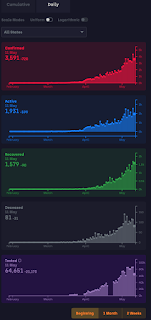
Chaos (calamity ?) Of Govt’s Making and What Now? ————————————————————————— Whether PM delayed the lockdown for politics in MP or not ...
-
 Chaos (calamity ?) Of Govt’s Making and What Now? ————————————————————————— Whether PM delayed the lockdown for politics in MP or not ...
 -
 I overheard a friend talking about her. Just a few words, but so enchanting, so inviting. I got her number and immediately called her fo...
 -
सकाळी प्रभात रस्त्यावरून जाताना अचानक लक्षात आल की त्या नेहमिच्या हिरव्या कोपऱ्यावर एक बंगला आहे. आज तिथली हिरवाई पूर्ण छाटूण टाकली होती. स...